Albion Trustees Dig into Department Budgets During Extended Special Session
The Village Board spent over three hours reviewing financial figures for Code Enforcement, the Fire District, and the Water Treatment Plant. The meeting comes as the board continues its work on the upcoming fiscal year's budget.
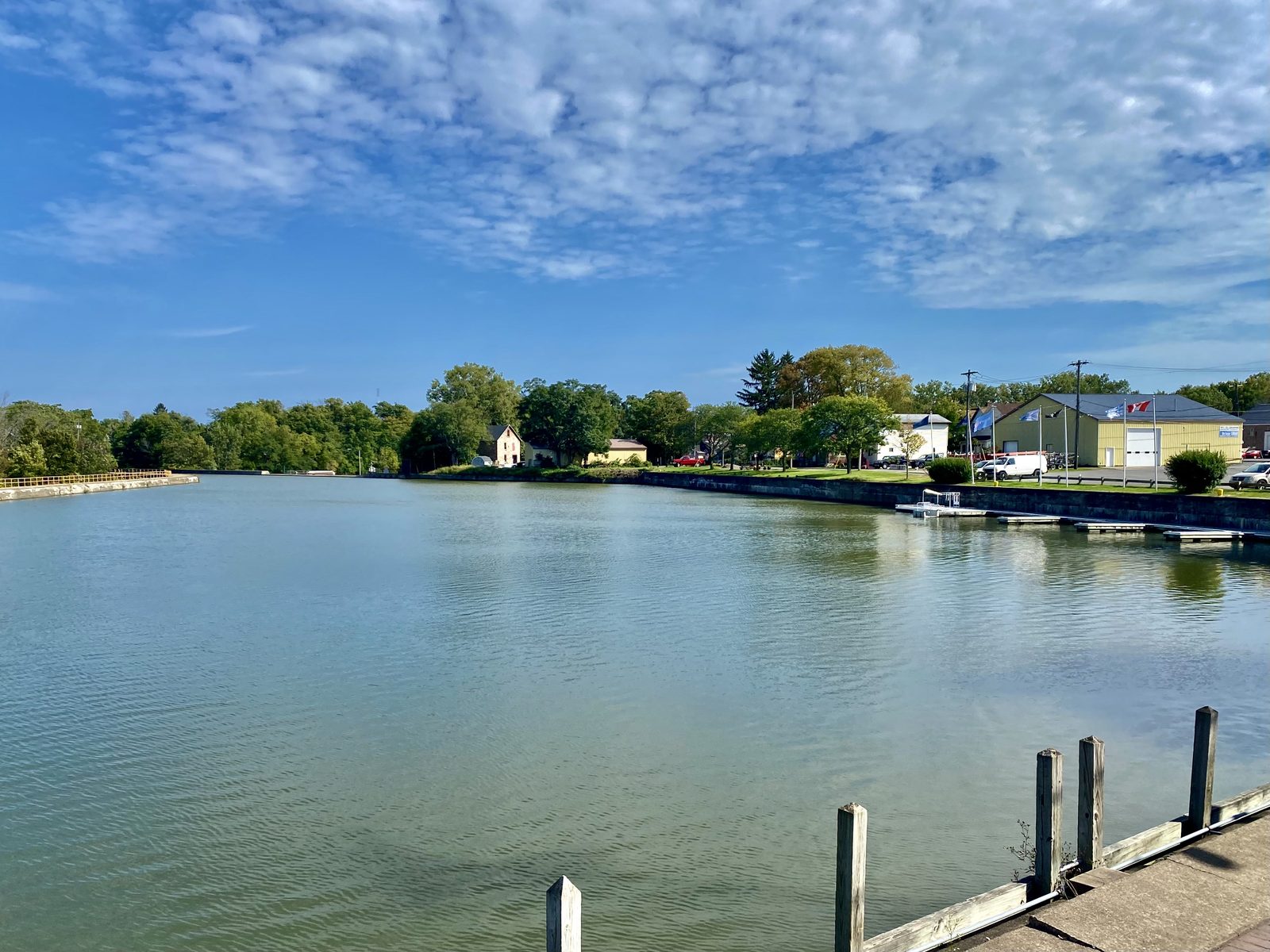
The Erie Canal running through Medina, NY — photo:
Andre Carrotflower
(BY-SA 4.0)
▶Key Actions & Decisions
●Board of Trustees held a special meeting March 4, 2025, devoted to reviewing department budgets ahead of the new fiscal year.
●Reviewed financial requests for Code Enforcement (Chris Kinter), the Fire District/PCF (Aric Albright), and the Water Treatment Plant (Superintendent Levi Boyer).
●Meeting ran from 6:07 PM to 9:21 PM; Trustee Riley arrived at 6:13 PM and Deputy Mayor Bennett arrived at 6:23 PM.
●Two members of the public attended; no public comments were recorded regarding the budget figures.
●The board adjourned unanimously on a motion by Trustee McMurray, seconded by Trustee Gabalski.
ALBION — With the village’s fiscal health on the line, the Board of Trustees gathered Tuesday night for a marathon special meeting focused entirely on the nuts and bolts of the upcoming budget.
While the public attendance was sparse—only two residents were listed in the official attendance log—the work done inside Village Hall will directly impact property tax bills and water rates in the coming year.
Mayor Angel Javier Jr. called the meeting to order at 6:07 PM. Trustees arrived in a staggered fashion, with Trustee Riley arriving shortly after the start at 6:13 PM and Deputy Mayor Bennett joining the dais at 6:23 PM.
The primary item on the agenda was a detailed review of three specific department budgets: Code Enforcement, the Fire District (PCF), and the Water Treatment Plant (WTP).
According to the minutes, the board reviewed the financial requests for the Code Enforcement Department, which is overseen by Chris Kinter. Code enforcement remains a hot-button issue in the village, where officials have grappled with maintaining aging housing stock while ensuring safe living conditions.
The board also scrutinized the budget for the Water Treatment Plant. The minutes specifically note that WTP Superintendent Levi Boyer was involved in this portion of the review. Water infrastructure is a critical expense for Albion, and any changes to the WTP budget often trickle down to user rates for residents.
Additionally, the board reviewed the budget for the Fire District, referred to in the minutes as the PCF, which is overseen by Aric Albright. Fire protection services typically represent one of the largest line items in the village tax levy.
The meeting stretched for over three hours. There were no public comments recorded in the minutes regarding the budget figures during the session.
Trustees eventually wrapped up their financial deliberations, with Trustee McMurray making a motion to adjourn at 9:21 PM. The motion was seconded by Trustee Gabalski and carried unanimously.
With the budget review now complete, the board is expected to schedule further discussions to finalize the spending plan before the new fiscal year begins. Residents will have the opportunity to comment on the final budget proposal during a public hearing, which is typically held prior to the final adoption vote.
Share
Coverage of the Board of Trustees meeting on 2025-03-04,
Village of Albion, NY.
View original document ↗
This article was drafted by AI (claude-sonnet-agent-corrected) from the official meeting transcript and reviewed by a human editor.
Quotes link to source video timestamps for verification.
Read our editorial policy.
Community Discussion
0 comments
Be the first to comment on this story.
🔍Ask Albion
Have a question about this story? Search across meeting transcripts, village history, and municipal code.
Related Board of Trustees Meetings
Albion Village Board Reviews DPW and Cemetery Budgets in Special Session
●• Special meeting held Thursday, March 6, 2025, at 6:00 p.m.; Mayor Javier Jr. opened with the pledge of allegiance at 6:01 p.m.
●• Trustees McMurray and Riley were present in person; Trustee Gabalski participated by telephone; Deputy Mayor Bennett arrived at 6:34 p.m.
●• The board reviewed proposed budgets for Animal Control (Harry Papponetti) and the Police Department (Dave Mogle and Brandon Annabel); no specific dollar figures are recorded in the minutes.
●• The meeting adjourned at 7:49 p.m. on a unanimous vote.
Albion Board Funds Major Water Pump Repair, Moves to Replace Police Fleet
●Mt. Albion Tenant Settlement: Board authorized attorney to settle unpaid rent for 50% of the outstanding balance (3-0 vote).
●Canal Park Roof Repair: Approved $1,106.20 from reserves to repair the pavilion roof; payment to be made to Stockham Lumber (3-0 vote).
●Personal Donations: Trustee McMurray pledged $1,500 total; Mayor Javier pledged $1,100 from their pay to the Senior Citizen picnic, VFW, American Legion, and Village Historian.
●Budget Review: Board reviewed the Recreation budget, led by John Grillo, and Clerk budget, led by Tracy VanSkiver.
Community Discussion
0 commentsBe the first to comment on this story.